
Invited Speaker
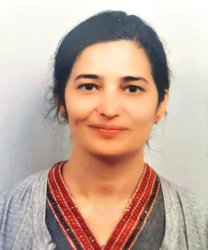
Ajazul H Wani
University of Kashmir


The conference begins on Wednesday, 9 December 2026 at IISER Pune.
The deadline for submission of Student/Post-Doc abstracts for platform presentations has been extended to September 30, 2026. Please, however, note that the early-bird fee deadline remains as is: September 20, 2026.
The 49th All India Cell Biology Conference and Symposium is the annual meeting of the Indian Society of Cell Biology, co-hosted this year by IISER Pune and BRIC-NCCS Pune, 9–12 December 2026.
With a theme centred on “Architecture of Life”, the conference explores how cellular life is organised across space and time — from molecules and biomolecular condensates to organelles, cells, tissues, and the dynamics of development and ageing. It asks a single question across every scale: what design principles keep a living system organised, robust, and alive?
The programme is organised around broad areas of cell biology — Organelles and Trafficking, Host–Pathogen Interactions, The Nucleus, The Cytoskeleton, and Lipids and Metabolism — together with named endowment lectures, special seminars, and short talks by students and post-docs. It opens with pre-conference workshops at both host institutes on 9 December and closes at BRIC-NCCS Pune on 12 December.
Founded in 1976, the ISCB promotes research and education in cell biology across India — running conferences, workshops and training programmes, and supporting young scientists. Membership is open to researchers and students: see iscb.co.in.
Endowment awards and travel grants are open to ISCB members only. If you intend to be considered for either, join the Society before you submit your abstract.
The Indian Institute of Science Education and Research, Pune, established in 2006, integrates research and education in the basic sciences and is recognised as an Institution of National Importance.

Its cell and molecular biology community works across genome organisation, biophysics, microbiology, development and ageing, supported by extensive imaging and microscopy facilities on the Pashan campus.

The BRIC-National Centre for Cell Science (BRIC-NCCS), established in 1986, is an institute of the Department of Biotechnology’s Biotechnology Research and Innovation Council (BRIC), Government of India, and one of the country’s principal centres for research in cell biology. It is located on the Savitribai Phule Pune University campus.
It hosts the National Cell Repository, among India’s largest collections of authenticated cell lines, and its research spans chromatin biology, immunology and infection, cancer biology, stem cells and regenerative medicine, and microbial diversity.

Registration and payment are a single step through SBI Collect. Early-bird registration runs 20 August – 20 September 2026, with a lower rate if you are not taking campus accommodation.
| Category | Accommodation | Early bird 20 Aug – 20 Sep | Regular 21 Sep – 20 Nov |
|---|---|---|---|
| Student | Hostel, shared | ₹5,900 | ₹7,080 |
| None | ₹4,425 | ₹5,310 | |
| Post-doctoral | Guest House, shared | ₹8,260 | ₹9,440 |
| None | ₹6,608 | ₹7,552 | |
| Faculty | Guest House, single | ₹11,800 | ₹14,160 |
| None | ₹9,440 | ₹11,328 | |
| Industry | Guest House, single | ₹16,520 | ₹16,520 |
| None | ₹13,216 | ₹13,216 | |
| International | Guest House, single | US$200 | US$250 |
| None | US$160 | US$200 |
Fees cover all scientific sessions, meals and tea. Rows showing a room type include accommodation on the IISER Pune campus for the nights of the meeting; rows showing None do not. GST is already included in every amount above, so there is nothing further to add at the payment screen.
ISCB membership is encouraged for non-members, and is required for endowment awards and student travel grants — join via iscb.co.in.
Days 0–2 — IISER Pune
Dr. Homi Bhabha Road, Pashan, Pune 411008
Day 3 — NCCS Pune
SPPU Campus, Ganeshkhind, Pune 411007
✈ Pune International Airport (PNQ) — ~17 km · 🚉 Pune Junction — ~9 km
Campus accommodation is optional and, if taken, is included in the fee. A shuttle will transfer delegates to BRIC-NCCS on the morning of 12 December.
Pleasant December climate (~12–28 °C).
SBI Collect takes your details as you pay, so completing the payment completes your registration. Keep the receipt and transaction number — you will be asked for them at the registration desk.
Register & Pay →
Fees are listed in full under Fee Structure, near the top of this page.
The meeting runs across two campuses. The first three days are held at IISER Pune, with all talks in Raman Hall, Lecture Hall Complex, and poster sessions and meals in the Dining Hall Complex. The final day (12 December) moves to NCCS Pune for Sessions 5 and 6, the endowment lecture and the award ceremony.
IISER Pune on Google Maps → · NCCS Pune on Google Maps →
Pre-conference workshops run at both IISER Pune and NCCS Pune. The Superresolution Microscopy workshop runs 7–9 December and is applied for separately; other workshops run on 9 December. Places are limited.
Campus accommodation is optional. If you take it, it is bundled into your fee and allocated on the IISER Pune campus — students in shared hostel rooms, post-docs in shared guest-house rooms, faculty, industry and international delegates in single rooms. No separate booking is needed.
Making your own arrangements? Register at the lower rate for your category.
The IISER Pune campus daycare facility can be made available to delegates on request. Places are limited and must be arranged in advance — write to daycare@iiserpune.ac.in with the dates you need and the age of the child, and copy aicbc2026@acads.iiserpune.ac.in so the organisers can follow up.
A shuttle will be provided to transfer delegates from IISER Pune to BRIC-NCCS Pune on the morning of 12 December.
The organisers do not arrange transport to or from the airport, railway station or bus terminals. App-based taxis (Uber, Ola, Rapido) are readily available at all of these and reach the IISER Pune campus in about 30–45 minutes.
By Air
Pune is well connected by air through Pune International Airport (PNQ), located approximately 17 km from the IISER Pune campus (~45 minutes by road, depending on traffic). It receives direct flights from Delhi, Mumbai, Bengaluru, Hyderabad, Chennai and Kolkata.
By Train
Pune Junction Railway Station (PUNE) is well connected to major cities across India through frequent express and superfast trains. It is about 9 km from the campus (~30 minutes by road). The Pune Metro Aqua Line reaches Vanaz, the nearest station to campus, from where a taxi is a short ride.
By Road
Pune is well connected by several major national highways and expressways. The Mumbai–Pune Expressway links Pune to Mumbai in approximately 3 hours. Long-distance buses run from Mumbai, Nashik, Chhatrapati Sambhajinagar (Aurangabad), Hyderabad and Bengaluru, via MSRTC and private operators. The campus is reached from anywhere in Pune via Pashan Road.
December in Pune is dry and sunny, roughly 28 °C by day and 12 °C at night. Bring a light jacket for the early-morning and evening sessions.
The Programme and Abstract Book will be published here before the meeting.
Platform speakers, poster timings, board numbers and a printable schedule will follow closer to the meeting.
Poster size — 3 ft wide × 4 ft high, portrait. That is approximately 91 cm × 122 cm. Boards will not take a wider or taller poster, and landscape posters cannot be accommodated. Please bring your poster printed; mounting material is provided at the venue.
There are two deadlines, and only the first is a hard cut-off:
30 September 2026 — to be considered for a short talk. Talks are selected from the abstracts received by this date, so a late abstract cannot be considered for the podium.
Short talks are open to students and post-doctoral researchers only. Abstracts from faculty, industry and other delegates are welcome for poster presentation. Note that this deadline is later than the early-bird registration cut-off of 20 September — register by 20 September for the lower rate, even if your abstract follows.
20 November 2026 — for a poster. Poster abstracts are accepted right up to the registration deadline.
Submission instructions will be published here; until then, prepare your abstract in the template below and email it to aicbc2026@acads.iiserpune.ac.in.
Download the abstract template Word (.docx) · one pageName the file Surname_FirstName_AICBC2026.docx and keep the abstract body to 300 words. Mark the presenting author with an asterisk.
An intensive, advanced-level programme for researchers, imaging scientists and facility professionals who already work with microscopy. It takes imaging past the confocal — through the principles, experimental design, acquisition, optimisation, validation and quantitative analysis of superresolution, with extended hands-on time on STED and Lattice SIM.
The workshop is deliberately small and highly interactive: twelve participants work in two batches of six that rotate between the STED system at the BRIC-NCCS Imaging Facility and the Lattice SIM system at IISER Pune, with expert discussion, practical problem-solving and the possibility of imaging their own prepared samples. Full-time participation throughout the workshop is mandatory.
Both systems break the diffraction limit, and they break it differently. Choosing well is most of the skill — which is why every participant works on both.
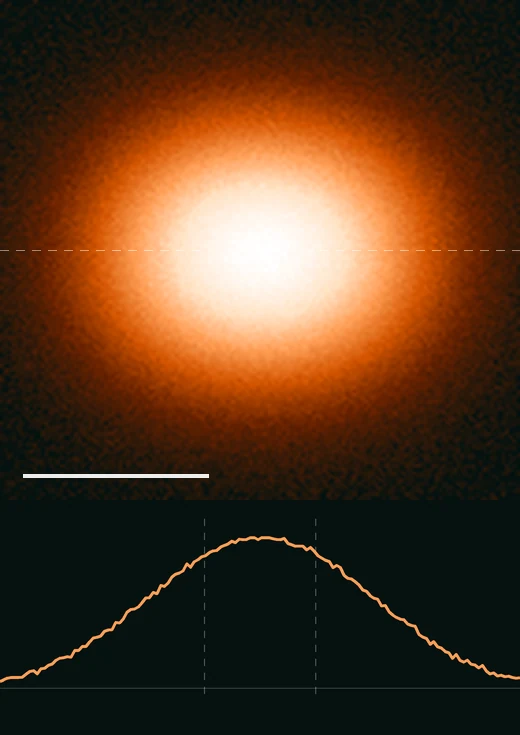 Confocal~230 nm
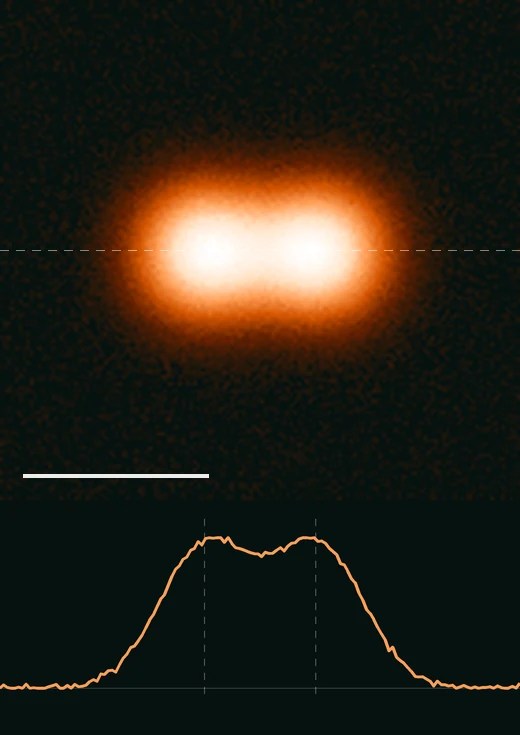 Lattice SIM~115 nm
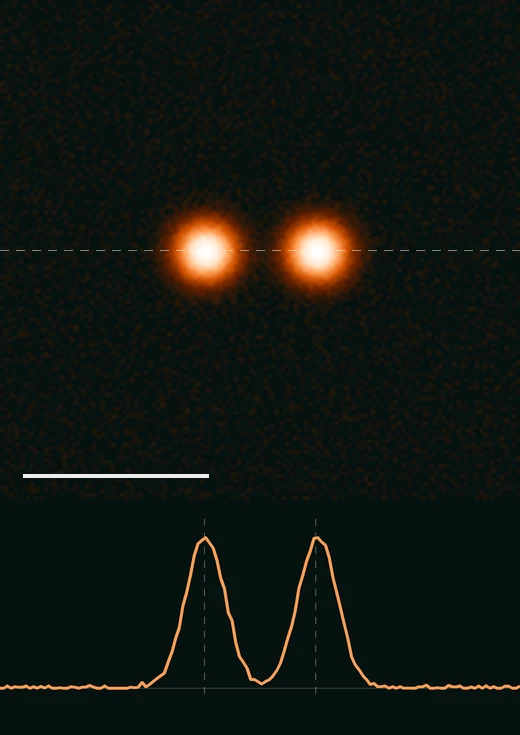 STED~50 nm
Two point sources 120 nm apart, with the intensity profile measured along the dashed line. That dip between the peaks is the resolution criterion itself. Scale bar 200 nm. Simulation.


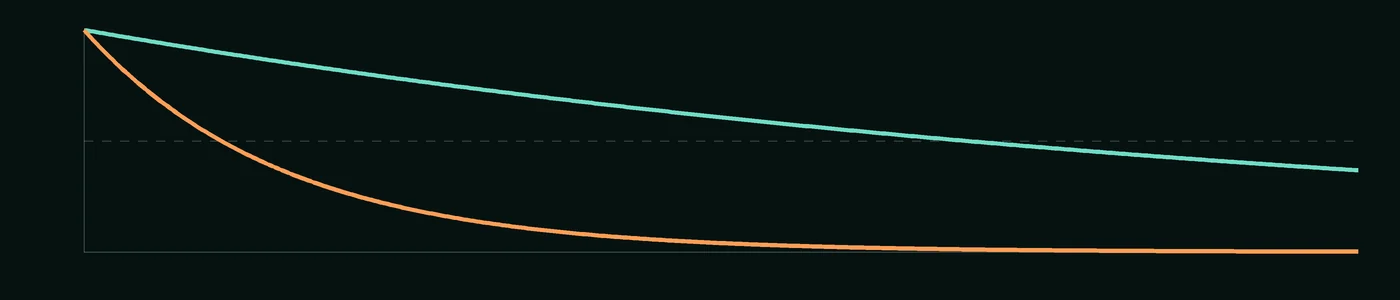
The same structure over a time-lapse, at identical display scaling on every frame — so the dimming and the rising noise are real, not a contrast trick. Simulation.
SIM buys a factor of two almost for free; STED buys four or five and pays for it in photons. STED is visibly the sharper at frame 1 — but by frame 20 there is little left to image. A live, multicolour, whole-cell experiment usually wants SIM; a fixed sample where two structures sit 60 nm apart wants STED. Neither is the better instrument.
Places are limited and allotted by selection, not first-come-first-served. Eleven questions, three of them written answers — about fifteen minutes. Answer them from your own bench practice.
Applications opening shortly Poster A3 · PDFWorkshop applications are separate from conference registration. Selected participants must also be registered for AICBC 2026.
This workshop is intended for participants who already have a foundation in microscopy and practical experience with image acquisition and analysis. Prior hands-on experience is mandatory.
Applicants working in research laboratories or imaging core facilities where light microscopy is central to the research — and who provide access to, maintain, or deliver training in light microscopy for their institution or the wider community — are particularly encouraged to apply.
Applicants without prior hands-on experience in microscopy and image analysis may not be considered for selection.
Go beyond conventional microscopy. Develop the knowledge and practical skill to decide when, why and how to use superresolution — and how to turn high-resolution images into meaningful quantitative biology.
Take your imaging from resolution to understanding.
Select a day. Timings follow the convenor’s working schedule and may shift by a few minutes on the day.
IISER Pune · foundations of superresolution
IISER Pune & BRIC-NCCS · hands-on, in two batches
IISER Pune · analysis and your own samples
° Marked figures are provisional and awaiting confirmation by the organisers.

Questions about the workshop: aicbc2026.workshop@gmail.com
Anything about the conference itself: aicbc2026@acads.iiserpune.ac.in
Students and post-doctoral researchers presenting posters or platform talks are eligible for the Society’s endowment awards — a certificate and a cash prize each. A limited number of travel grants may be available to student members.
Eligibility rules, prize values and the travel-grant application route will be published here. Enquiries: aicbc2026@acads.iiserpune.ac.in.
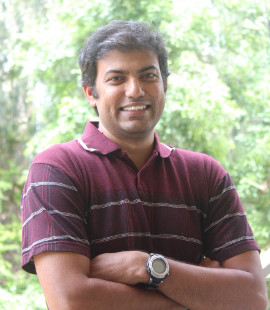
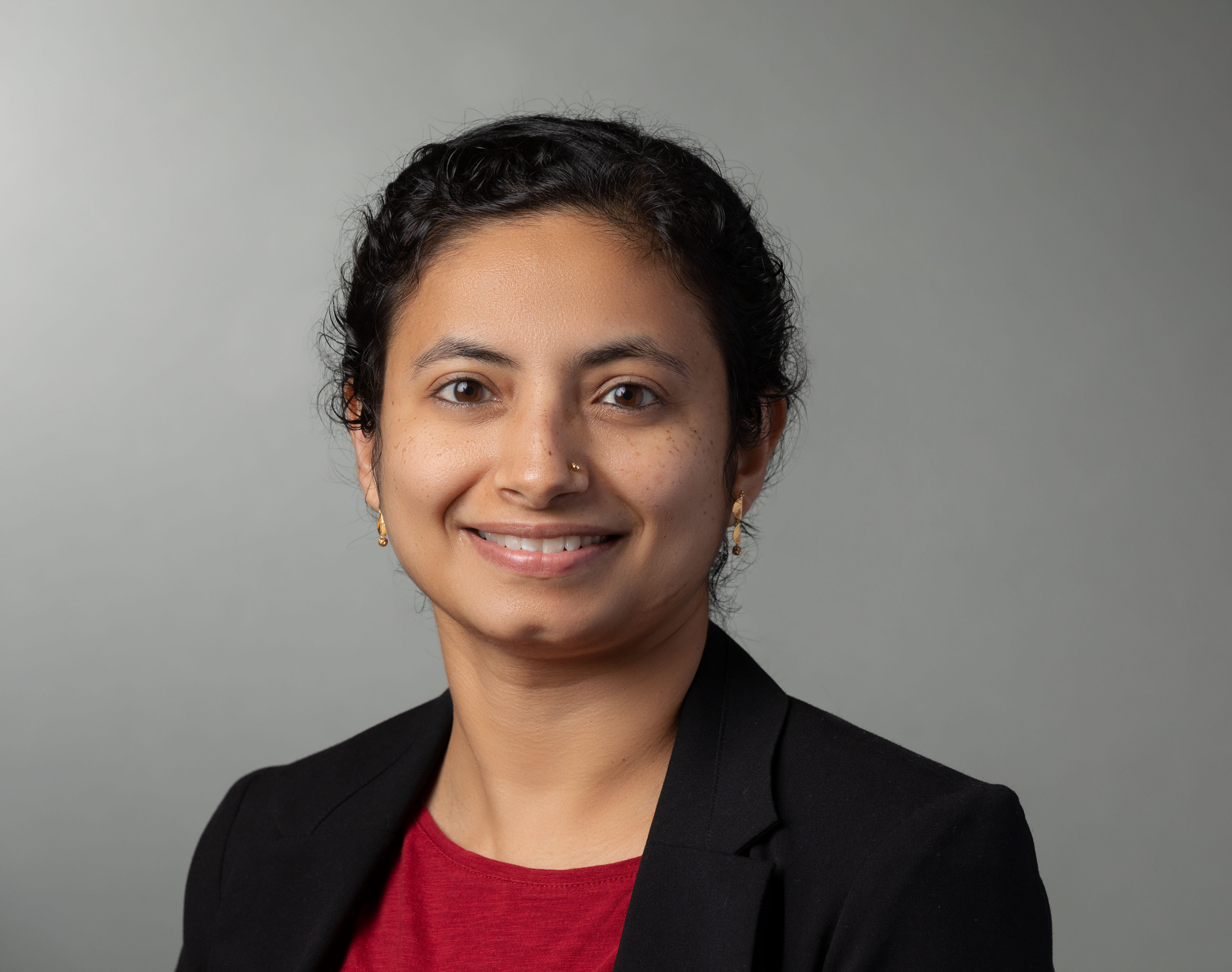
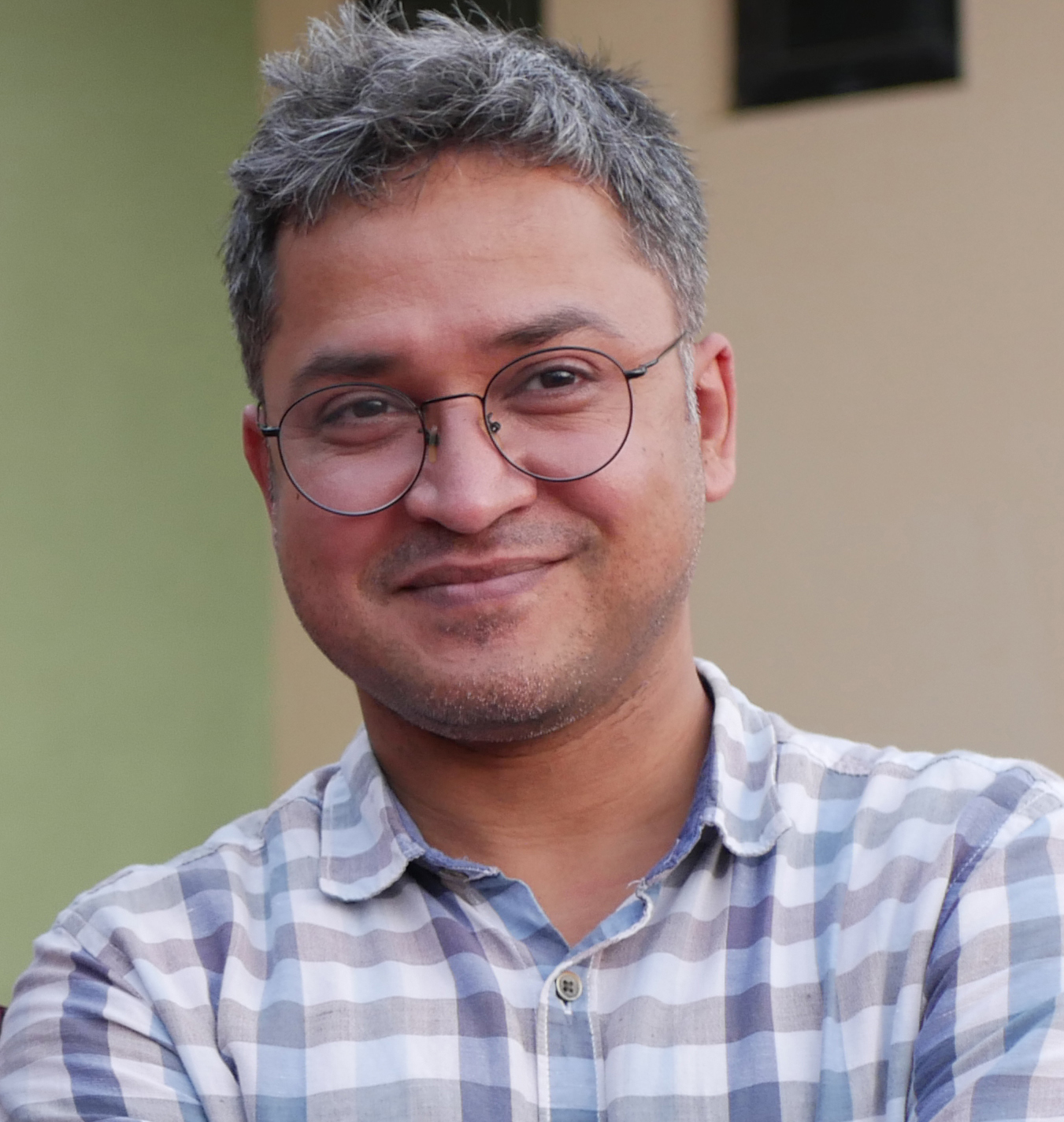
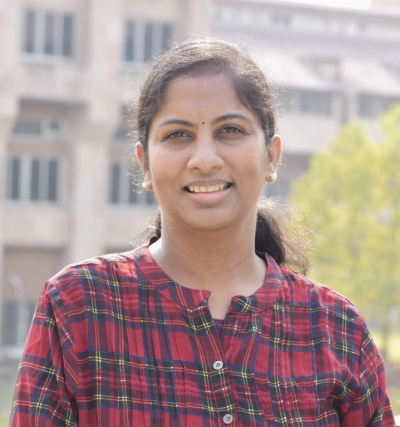
Leaders across the spectrum of cell biology — from chromatin and organelles to host–pathogen interactions and ageing.
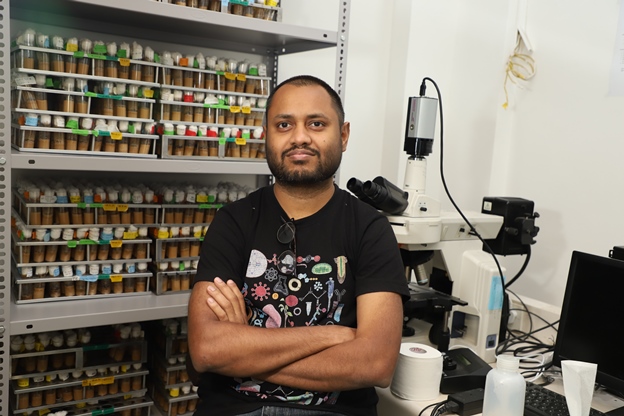








Four days across two campuses: Days 0–2 at IISER Pune, the final day at NCCS Pune. Select a day to view its schedule.
IISER Pune & BRIC-NCCS Pune · workshops, registration and the opening seminar
IISER Pune · Raman Hall, Lecture Hall Complex
IISER Pune · Raman Hall, Lecture Hall Complex
NCCS Pune · shuttle from IISER Pune at 09:00
Poster boards go up on the morning of 10 December and stay up for both full conference days. Odd-numbered presenters attend their board in the afternoon slot and even-numbered presenters in the evening slot, on each of 10 and 11 December.
Timings are confirmed. The remaining session topics and the speaker names will be published as they are allocated.
Manufacturers of instruments and reagents will exhibit throughout the meeting. Sponsorship and exhibition enquiries are welcome at aicbc2026@acads.iiserpune.ac.in.
Registration and payment happen together: SBI Collect takes your details as you pay, so completing the payment completes your registration.
Trouble with the payment? Write to aicbc2026@acads.iiserpune.ac.in quoting your transaction number.